Campaigns at Nordstrom

Problem

Customers abandoned 40% of campaign entries because the products shown didn't match expectation eroding trust and reducing purchase intent

Goal

Increase product relevance and customer engagement through a more personalized and scalable campaign experience

My contribution & Impact

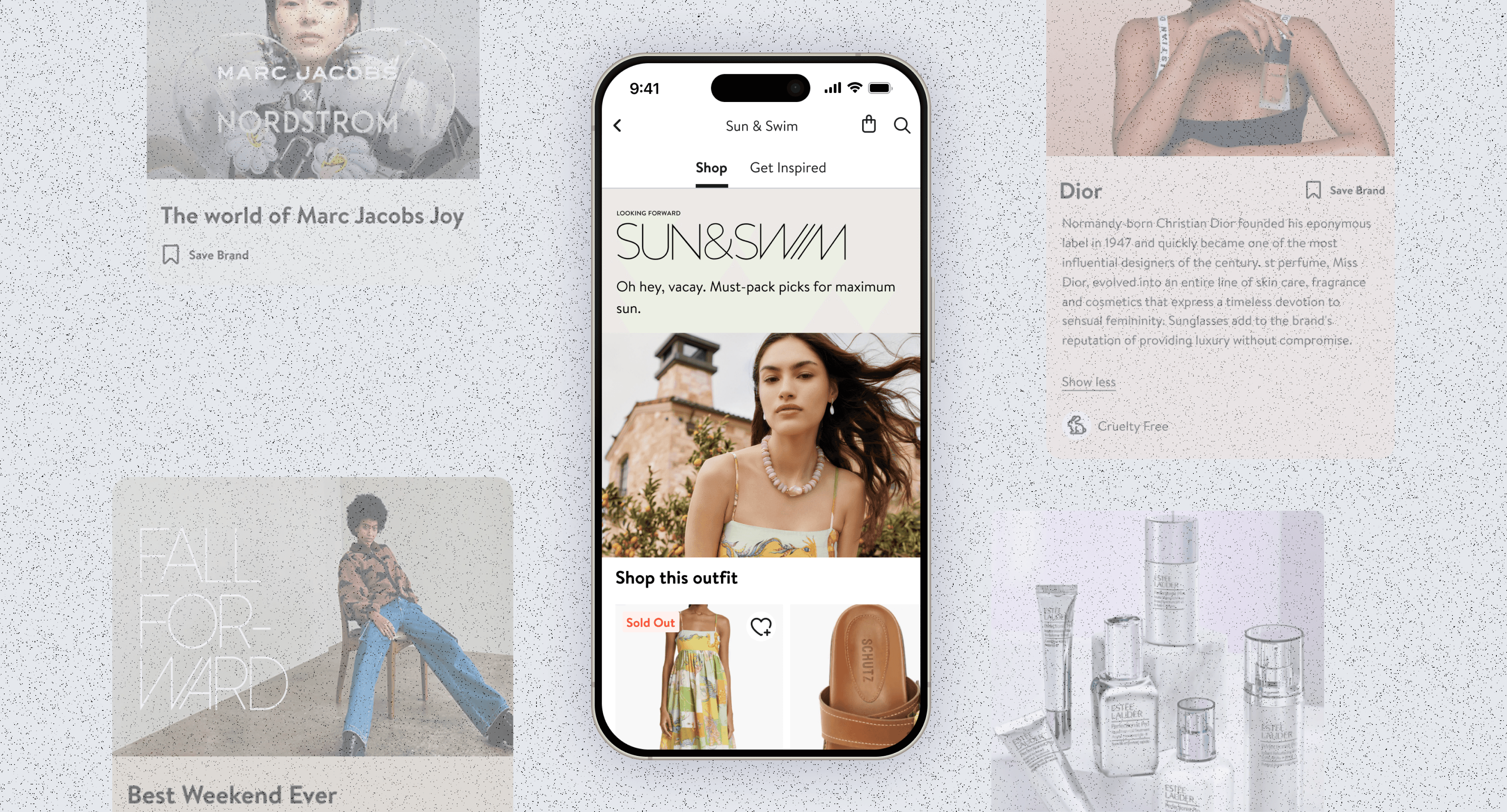
I led end-to-end redesign of Nordstrom's campaign experience, replacing manual pages to scalable, data driven campaigns across 15+ campaign types.


Resulting +3.14% demand, +2.11% engagement, +2.16% purchases, and a foundation for scalable content system

Launched

2024

My role

Design lead

Who I worked with

Researcher

Analytics

UX Writer

DLS team (Design Language System)

Creative Director

Marketing

PMs

Engineering Manager

What led us to redesign?

Before campaign page

Customers need relevance, clarity, and trust

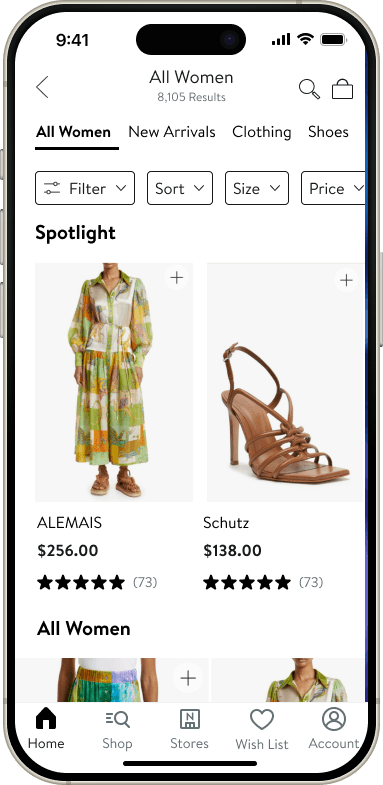
Customers landing on campaign pages were overwhelm by large and irrelevant product sets. When the experience failed to deliver a seamless connection between what they clicked and what they saw, trust erode quickly leading to drop-off despite high purchase intent.

The design opportunity

Customers want content and products that directly align with the campaign, along with clear availability and thoughtful alternatives when items are out of stock. Without this clarity, the experience feels misleading, overwhelming, and disconnected.

"The product results are overwhelming and not relevant to me"

"I only see 10 products related to the campaign and then thousands of random products. It feels like a clickbait"

"I don't see the item from the email.."

Why this matters to the business?

Scaling relevance through smarter curation

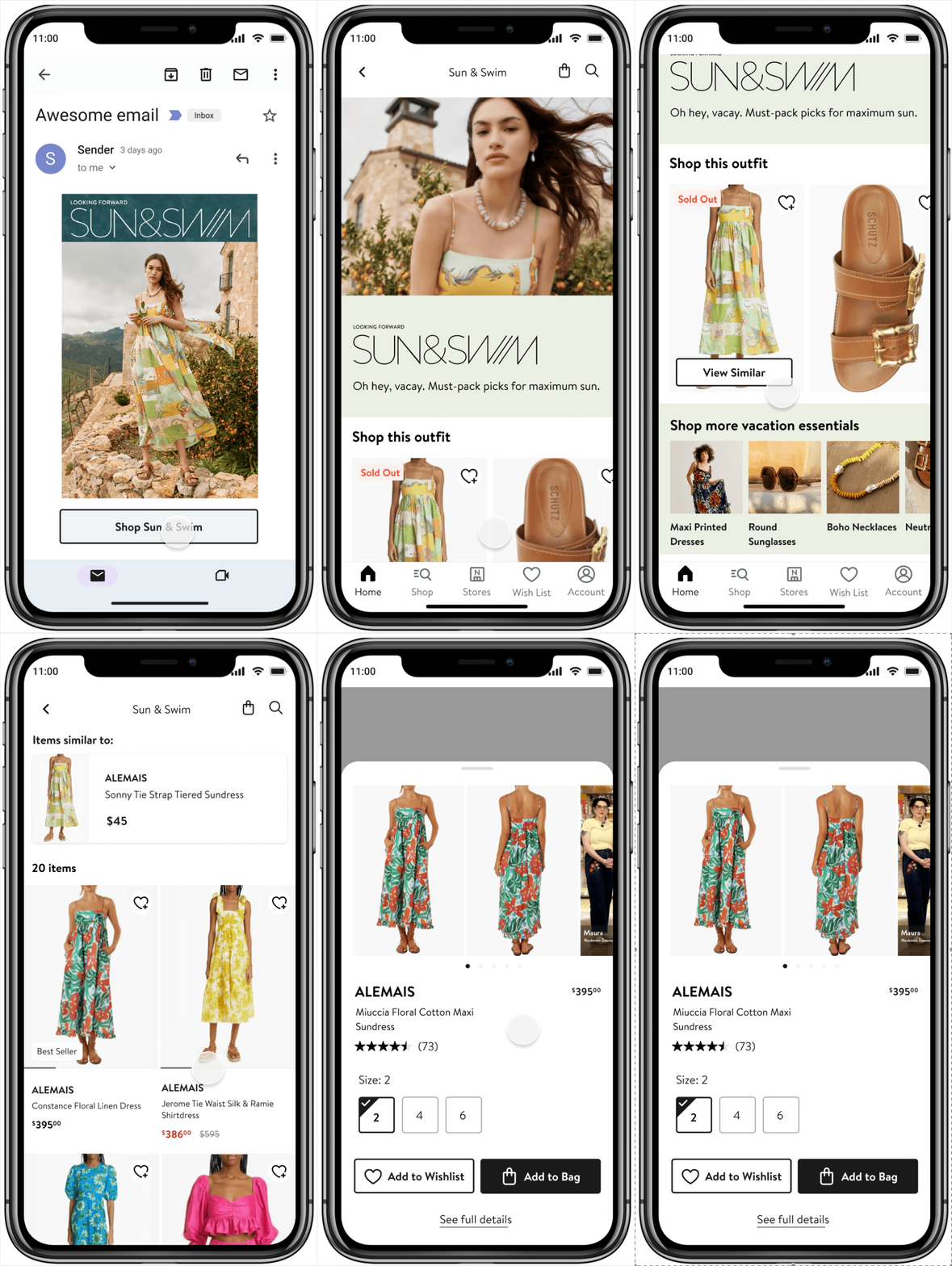
Today's campaign limit flexibility in content presentation and make it difficult to connect campaign messaging with dynamic relevant product sets.


While AI-driven curation has already reduce manual effort and improved outcome in the other spaces, campaign landing pages remain resource-intensive

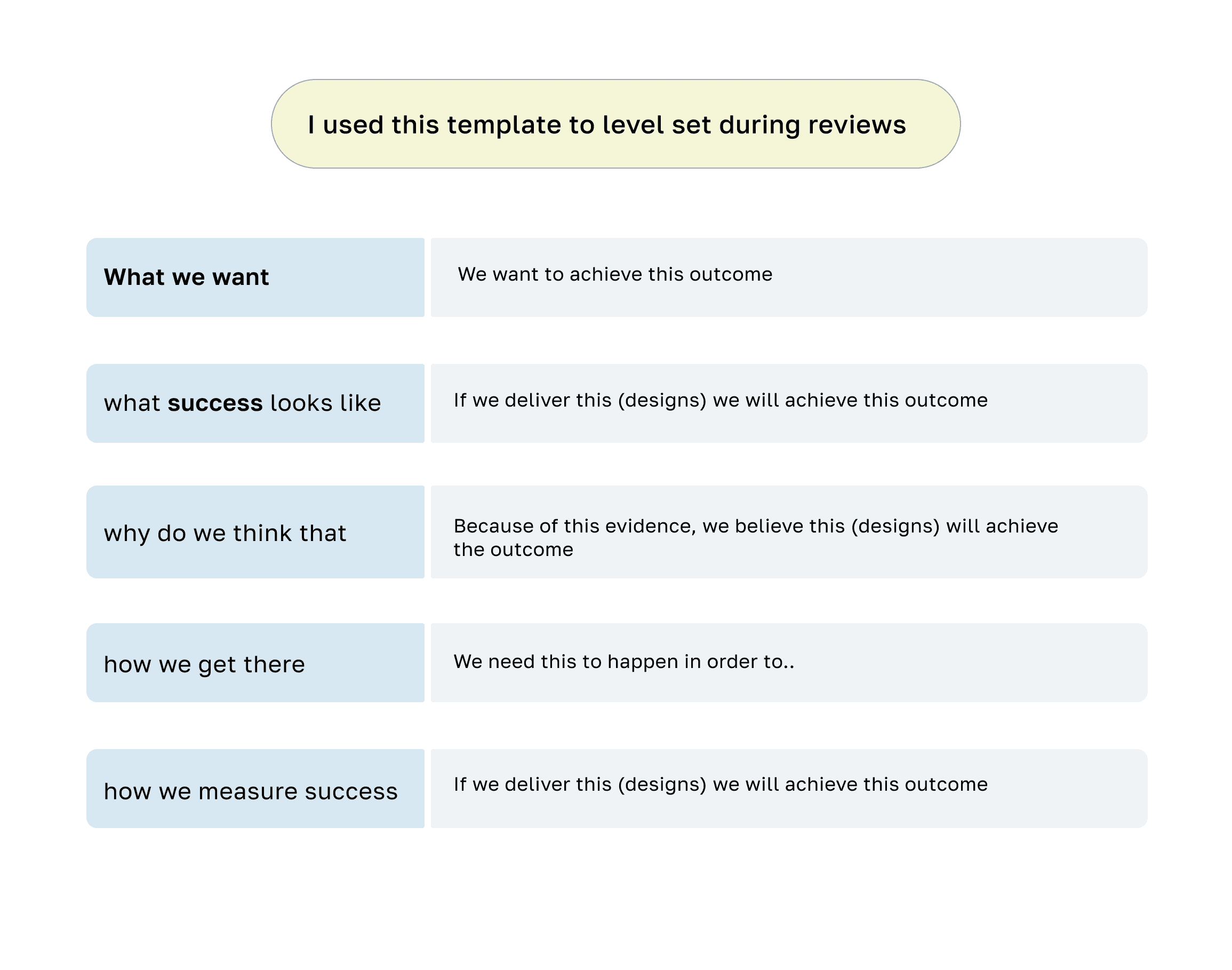
Success will be measured by:

  • Increased time spent on landing pages

  • Higher demand and purchase driven by campaigns

  • Improved product engagement and conversion

  • 50% reduction in merchandiser effort to build campaign pages

Before

Merchandisers align on key campaign theme

manually tagging content, components and campaigns across multiple tools

Hand-curating specifics style group to

populate product sets (SKUs)

multiple tools aren’t linked resulting data lost (i.e sold out items, lost inventory)

Static product sets

customers see the same fixed products, regardless of intent or personalization

Inconsistent relevance

customers see the same fixed products, regardless of intent or personalization
After

Campaign intent defined

clearly defined theme, target audience, and desired messaging by establishing intent

Rule based product logic

while leverage AI to further curate product sets that support campaign story

Modular layout framework

content is organized into modular component that can adapt to different campaign

Dynamic product sets

dynamically generated to reflect campaign intent, then refined through a dynamic filtering layer

Scalable and reusable content system

scalable, reusable, delivering measurable improvements in engagement, conversion, and operation efficeiency

The decisions that shaped redesign
Shifting from manual builds to a scalable framework

We always intended to scale beyond a single campaign, but early on it was unclear how to do so given technical constraints, inconsistent content structures, and varying campaign formats across platforms. To make scaling viable, we standardized content guidelines and defined clear logic rules that could adapt across campaign types while preventing customers from feeling overwhelmed by excessive or irrelevant results


At the same time, we reduced manual effort for marketing and creative teams by shifting from one-off page builds to a reusable system with built-in logic, enabling campaigns to launch faster without increasing operational complexity.

1.

Aligning with teams to scale campaign impact:

The project started with broad scope and inconsistent definitions of success across stakeholders. Product, marketing, and merchandising each had different of what "redesign" meant.


Navigating constraint:

I led a design workshop and design reviews to align on shared north star and defined measurable success criteria tied to engagement, demand, and operational efficiency. Partnering with marketing and analytics helped us narrowing scope and focusing the work on improving relevance at scale.
2.

Evolve shared components instead of creating new ones:

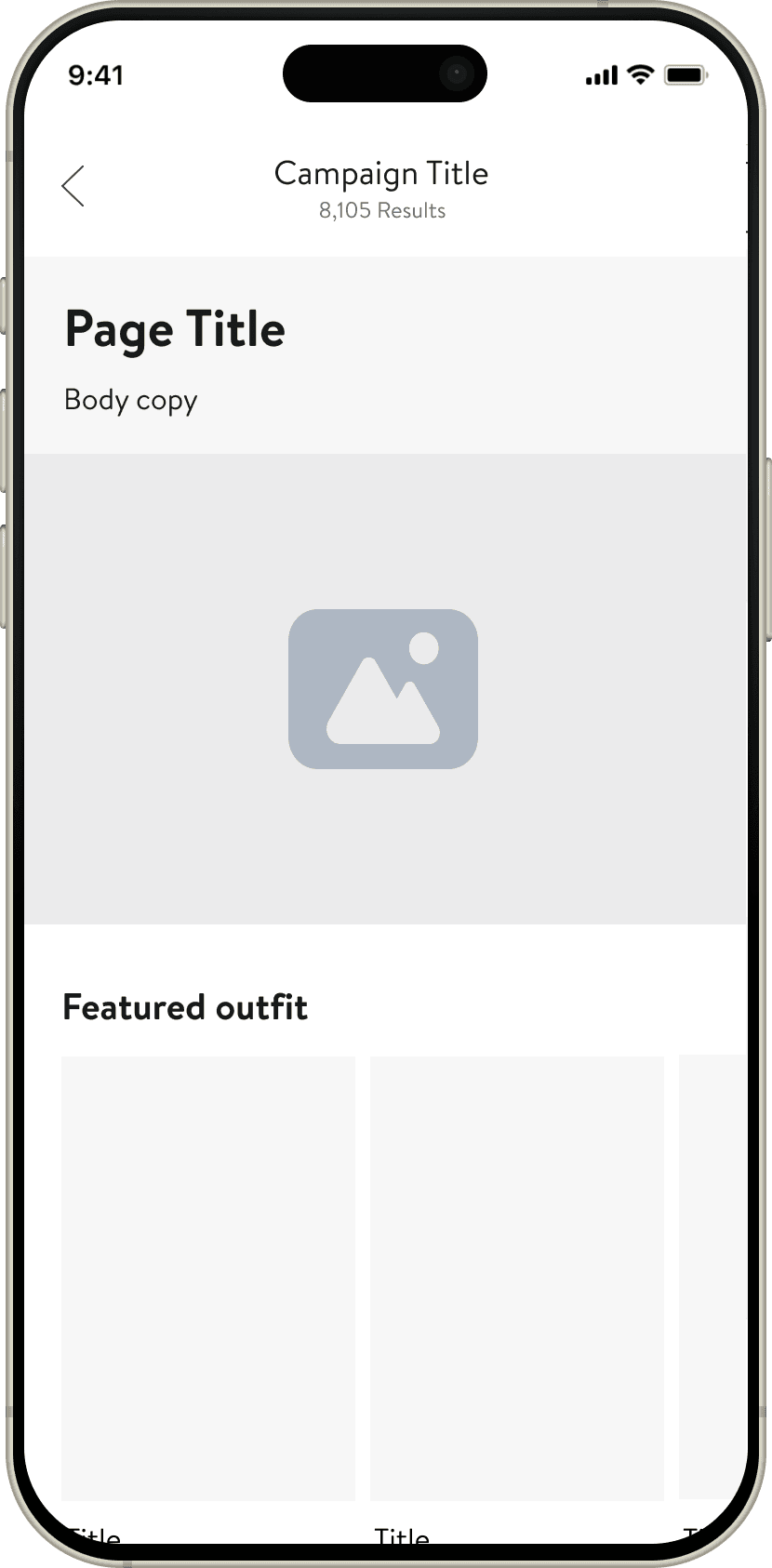
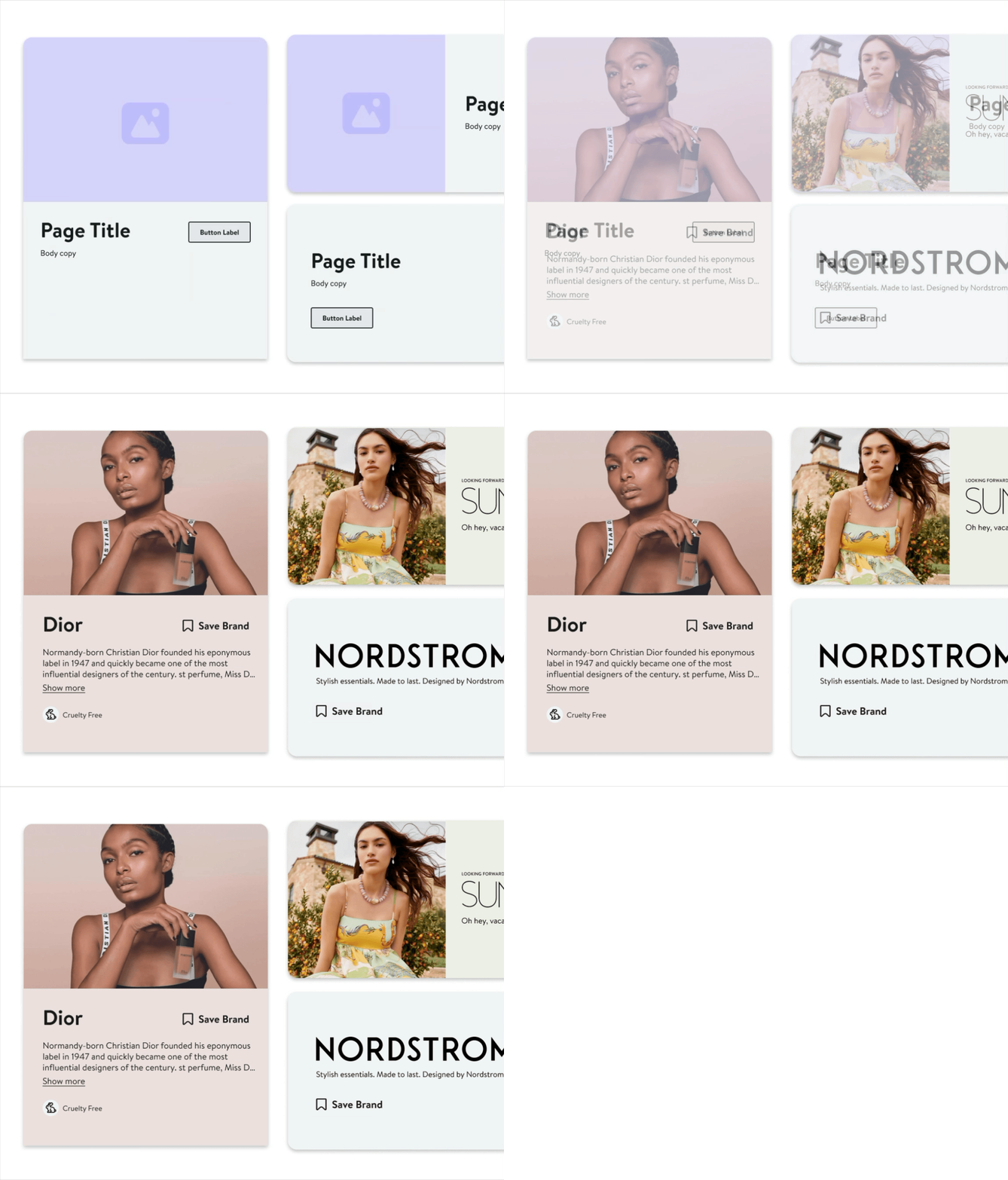
Rather than introducing new campaign specific UI or assets, we partnered with design systems team and engineering to evolve existing shared components to support dynamic product logic.


Navigating constraints:
This surfaced lots of alignment conversation as campaigns needed to scale across breakpoints, but creative assets were built for fixed layouts with limited variants. Dynamic rendering risked broken hierarchy and compromised storytelling.

3.

Prioritize customer intent to discover relevant products:

Customer data showed that 33% of user struggled to find relevant categories. We know that even we surface relevant results, customers can feel overwhelmed by the products shown and ultimately drop off.


To address this, we introduced a reusable filter component that dynamically grouped products based on context, helping users narrow overwhelming results in relevant pathways.


Navigating constraints:
The challenge was defining the underlying logic — what to show, when to show, how it adapts across the site. Establishing clear guidelines with engineering, merchandising, design systems ensured the component can scale consistently.

The results
Building a scalable growth content system

This initiative showed that real impact doesn't come from redesigning alone. It comes from improving how the design drive relevance. By aligning with teams around measurable success and designing scalable logic instead of one off pages, we made campaigns more effective and easier to maintain.

We chose to test with app users because they are the most highly engaged segment and historically show stronger lift from campaign interactions. The positive results validated our approach and reinforced the opportunity to expand this scalable, relevance-driven system across other entry points.

Results from 5M+ app customers

+3.14%

Increase in demand during A/B test

+2.11%

Increase in engagement with this experience

+2.16%

Increase in purchase driven by campaign experience

Extending the framework beyond campaigns

Scaling across high impact entry points

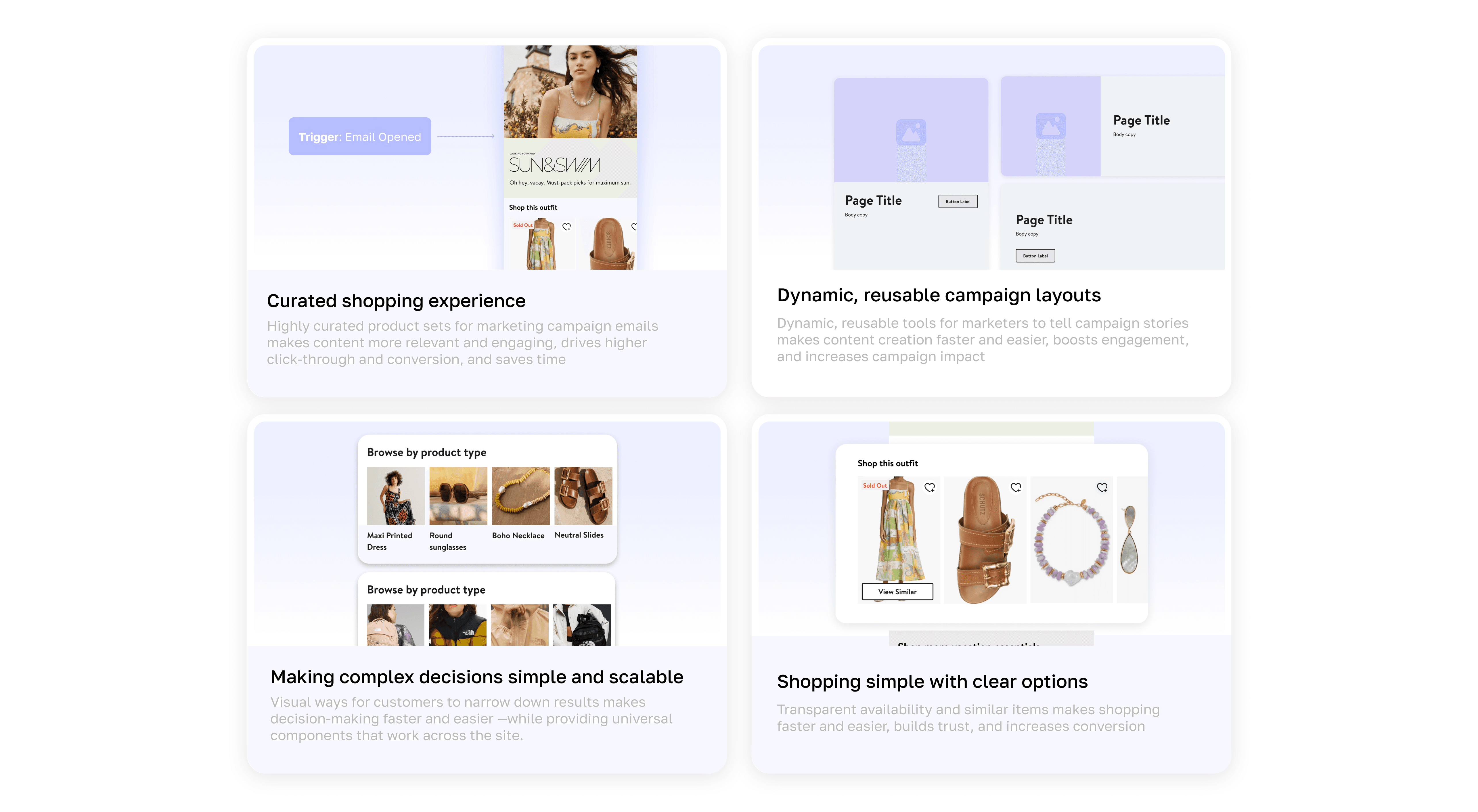
Not only are we scaling this content system across 15+ campaign types for fast follow, but we also identified brand pages as a high-opportunity expansion area.


Because brands are a top search destination with strong purchase intent, they also require flexible, relevance-driven content. By evolving shared components and applying the same scalable logic, we created a reusable system that improves product discovery while reducing manual merchandising effort across high-traffic areas.

Reflections
Front load feasibility

Late discovery of technical constraints caused avoidance rework. Moving forward, I prioritize early constraint mapping to improve execution speed and decision confidence.

Document decisions to scale teams

With multiple stakeholders involved, undocumented decisions created friction. Centralizing tradeoffs and agreements reduced redundant conversations and accelerated progress

Alignment before execution

Defining shared success metrics early across marketing, merchandising, engineering and design systems was critical. Without alignment, design direction would have fragmented. Clear goals shaped smarter tradeoffs.

Design is a system problem not just UI problem

What initially appeared to be relevance issue was ultimately rooted in operational logic and system constraints. Partnering closely with domain experts reframed the problem and unlocked structural, not cosmetic, solutions