Omnichannel Fulfillment

Problem

Customers could not easily discover in-store inventory while shopping online. This made it difficult to decide how and when to get an item, slowing purchase decisions and limiting visibility into store inventory.

Goal

Enable customers to discover and purchase from over 100+ million in-store inventory by connecting digital discovery with physical stores.

My contribution & Impact

I led the redesign of Nordstrom's omnichannel discovery experience, shifting fulfillment decisions earlier in the journey and connecting store inventory to the digital experience across web and app. This enabled customers to see store availability, sizing, and pickup timing before purchase.


Unlocked $100+ million in store inventory visibility, contributed $10.1 million in profit, and enabled customers to make faster, more confident purchase decisions based on nearest stores.

Launched

2024

My role

Design lead

Who I worked with

Researcher

Analytics

UX Writer

Creative Director

Marketing

PMs

Engineering Manager

My role

App for Nordstrom and Nordstrom Rack

Web for Nordstrom and Nordstrom Rack

Omnichannel Fulfillment

Problem

Customers could not easily discover in-store inventory while shopping online. This made it difficult to decide how and when to get an item, slowing purchase decisions and limiting visibility into store inventory.

Goal

Enable customers to discover and purchase from over 100+ million in-store inventory items by connecting digital discovery with physical stores.

My contribution & Impact

I led the redesign of Nordstrom's omnichannel discovery experience, shifting fulfillment decisions earlier in the journey and connecting store inventory to the digital experience across web and app. This enabled customers to see store availability, sizing, and pickup timing before purchase.


Unlocked $100+ million in store inventory visibility, contributed to $10.1 million in profit, and enabled customers to make faster, more confident purchase decisions based on nearest stores.

Launched

2024

My role

Design lead

Who I worked with

Researcher

Analytics

UX Writer

Marketing

PMs

Engineering Manager

Platform launched

App for Nordstrom and Nordstrom Rack

Web for Nordstrom and Nordstrom Rack

Why did customers struggle to discover store inventory?

Why customer struggle to discover store inventory?

Omnichannel Fulfillment

Launched

2024

Who I worked with

Researcher

Analytics

UX Writer

DLS team (Design Language System)

Creative Director

Marketing

PMs

Engineering Manager

My role

Design lead

Problem

Customers could not easily discover in-store inventory while shopping online. This made it difficult to decide how and when to get an item, slowing purchase decisions and limiting visibility into store inventory.

Goal

Enable customers to discover and purchase from over 100+ million in-store inventory by connecting digital discovery with physical stores.

My contribution & Impact

I led the redesign of Nordstrom's omnichannel discovery experience, shifting fulfillment decisions earlier in the journey and connecting store inventory to the digital experience across web and app. This enabled customers to see store availability, sizing, and pickup timing before purchase.


Unlocked $100+ million in store inventory visibility, contributed $10.1 million in profit, and enabled customers to make faster, more confident purchase decisions based on nearest stores.

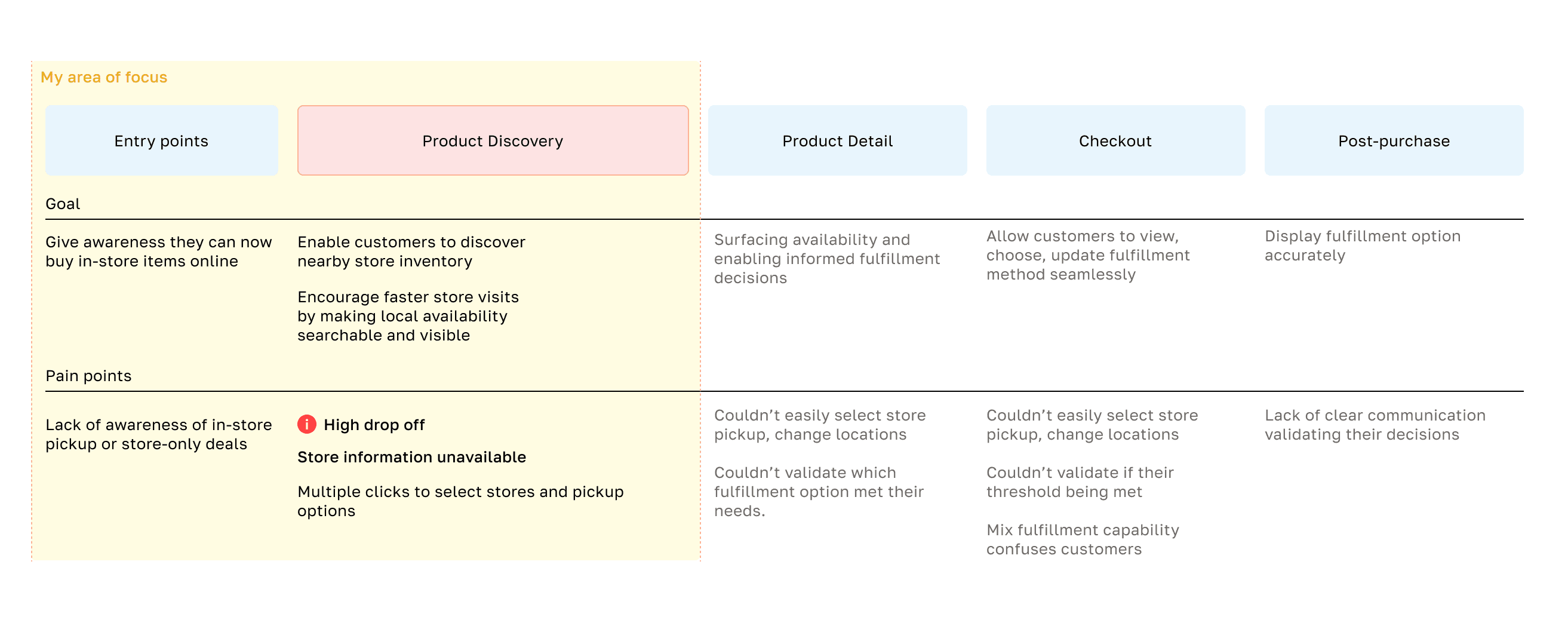
High drop-off occurred during discovery because customers couldn't easily determine if items were available in nearby stores

Store inventory represented significant untapped value but was largely inaccessible through digital channels, limiting customers’ ability to discover nearby availability. Past analysis showed that surfacing store navigation earlier increased purchase click-through rate by over 40%, highlighting discovery as a critical opportunity.


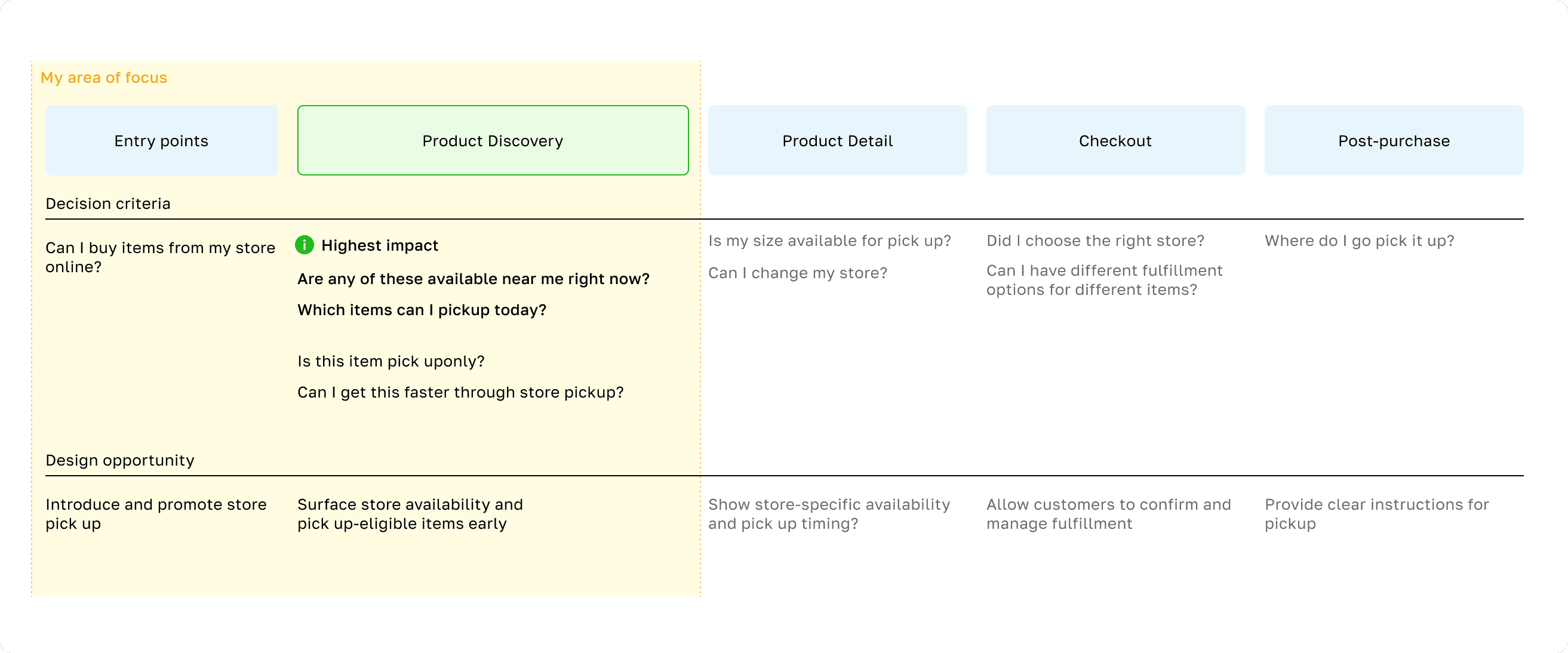
Using journey mapping and research insights, I introduced omnichannel signals at key decision points, focusing on discovery while partnering with adjacent teams to support fulfillment end-to-end.

High drop-off occurred during discovery because customers couldn't easily determine if items were available in nearby stores

Store inventory represented significant untapped value but was largely inaccessible through digital channels, limiting customers’ ability to discover nearby availability. Past analysis showed that surfacing store navigation earlier increased purchase click-through rate by over 40%, highlighting discovery as a critical opportunity.


Using journey mapping and research insights, I introduced omnichannel signals at key decision points, focusing on discovery while partnering with adjacent teams to support fulfillment end-to-end.

Research showed customers made fulfillment decisions based on urgency and store availability, but this information wasn’t visible during discovery. Without visibility into nearby inventory, size, or pickup timing, customers couldn’t confidently make fulfillment decisions, leading to hesitation and drop-off at the highest point in the journey. This also left valuable store-only inventory inaccessible digitally, limiting engagement and sales

Discovery was the highest friction point for fulfillment decisions

Before

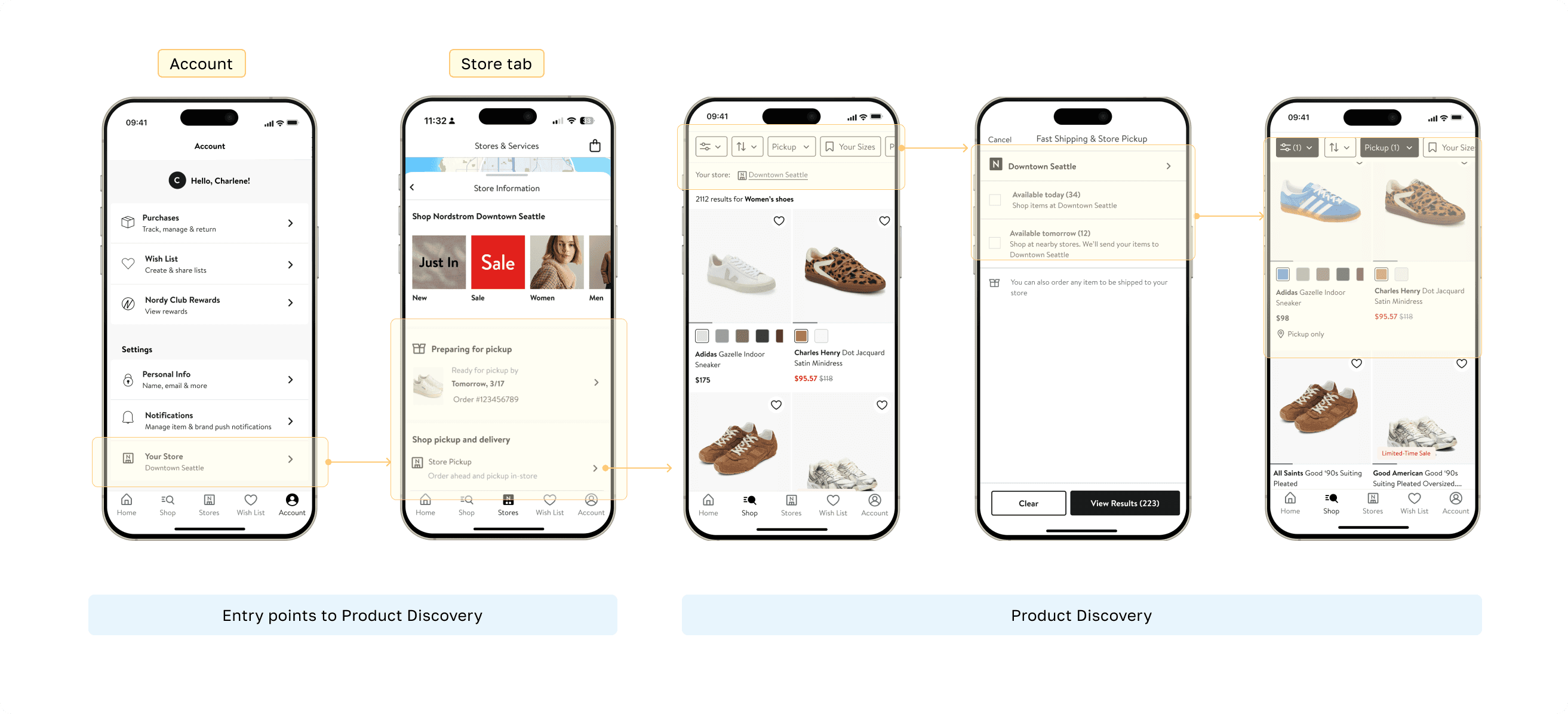
I focused on discovery and introduced omnichannel signals that surfaced nearby store inventory, pickup eligibility, and size availability while customers browsed. This allowed customers to evaluate real-world availability earlier and confidently choose how to receive their items. It also enabled access to inventory that was previously unavailable online, increasing engagement and driving higher sales.

Making store inventory actionable during discovery

After

Before

Discovery was the highest friction point for fulfillment decisions

Research showed customers made fulfillment decisions based on urgency and store availability, but this information wasn’t visible during discovery. Without visibility into nearby inventory, size, or pickup timing, customers couldn’t confidently make fulfillment decisions, leading to hesitation and drop-off at the highest point in the journey. This also left valuable store-only inventory inaccessible digitally, limiting engagement and sales

After

Making store inventory actionable during discovery

I focused on discovery and introduced omnichannel signals that surfaced nearby store inventory, pickup eligibility, and size availability while customers browsed. This allowed customers to evaluate real-world availability earlier and confidently choose how to receive their items. It also enabled access to inventory that was previously unavailable online, increasing engagement and driving higher sales.

Before

Discovery was the highest friction point for fulfillment decisions

Research showed customers made fulfillment decisions based on urgency and store availability, but this information wasn’t visible during discovery. Without visibility into nearby inventory, size, or pickup timing, customers couldn’t confidently make fulfillment decisions, leading to hesitation and drop-off at the highest point in the journey. This also left valuable store-only inventory inaccessible digitally, limiting engagement and sales

After

Making store inventory actionable during discovery

I focused on discovery and introduced omnichannel signals that surfaced nearby store inventory, pickup eligibility, and size availability while customers browsed. This allowed customers to evaluate real-world availability earlier and confidently choose how to receive their items. It also enabled access to inventory that was previously unavailable online, increasing engagement and driving higher sales.

Why does this matter to the fulfillment and inventory sector?


Why does this matter to fulfillment and inventory sector?

Why was store inventory was critical to business growth?

Physical stores are critical to Nordstrom's digital growth, enabling faster fulfillment and unlocking valuable inventory that customers couldn't access digitally.


However, store availability wasn't visible during discovery, leaving store inventory underutilized and contributing lost sales. Bridging this gap was essential to align the digital experience with Nordstrom's omnichannel strategy and

unlock this revenue opportunity.

Success will be measured by:

  • Store pickup adoption rate

  • Conversion rate for in-store items

  • Product detail click-through rate

  • Revenue to store pickup orders

Why store inventory was critical to business growth

Why store inventory was critical to business growth?

Physical stores are critical to Nordstrom's digital growth, enabling faster fulfillment and unlocking valuable inventory.


However, store availability wasn't visible during discovery, leaving store inventory underutilized and contributing lost sales. Bridging this gap was essential to align the digital experience with Nordstrom's omnichannel strategy and

unlock this revenue opportunity.

Physical stores are critical to Nordstrom's digital growth, enabling faster fulfillment and unlocking valuable inventory that customer couldn't access digitally. .


However, store availability wasn't visible during discovery, leaving store inventory underutilized and contributing lost sales. Bridging this gap was essential to align the digital experience with Nordstrom's omnichannel strategy and

unlock this revenue opportunity.

Physical stores are critical to Nordstrom's digital growth, enabling faster fulfillment and unlocking valuable inventory that customer couldn't access digitally.


However, store availability wasn't visible during discovery, leaving store inventory underutilized and contributing lost sales. Bridging this gap was essential to align the digital experience with Nordstrom's omnichannel strategy and

unlock this revenue opportunity.

Success will be measured by:

  • Store pickup adoption rate

  • Conversion rate for in-store items

  • Product detail click-through rate

  • Revenue to store pickup orders

The decisions that enabled omnichannel experience

Making store inventory actionable during discovery

A key priority was improving inventory turnover and reducing markdown risk by increasing digital access to store inventory. Many store-only and pickup-exclusive items remained difficult for customers to discover online, limiting engagement with inventory that could be fulfilled locally.


I identified where availability information was needed most and introduced omnichannel signals during discovery to surface store-specific inventory, pickup eligibility, and readiness timing. This allowed customers to consider store inventory as part of their decision-making process and helped increase engagement with inventory that previously relied on in-store traffic alone.

Making store inventory actionable during discovery

A key priority was improving inventory turnover and reducing markdown risk by increasing digital access to store inventory. Many store-only and pickup-exclusive items remained difficult for customers to discover online, limiting engagement with inventory that could be fulfilled locally.


I identified where availability information was needed most and introduced omnichannel signals during discovery to surface store-specific inventory, pickup eligibility, and readiness timing. This allowed customers to consider store inventory as part of their decision-making process and helped increase engagement with inventory that previously relied on in-store traffic alone.

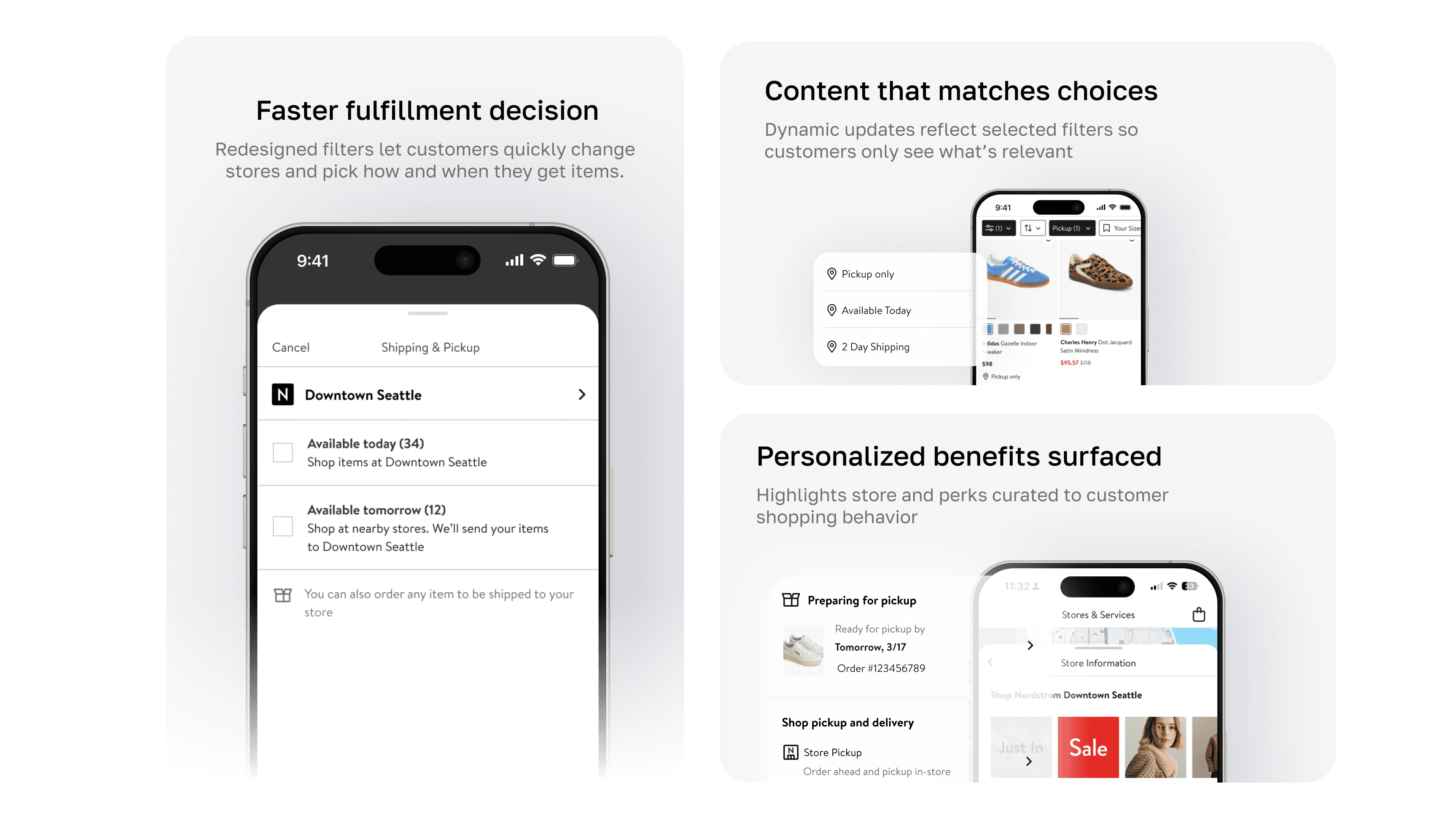
1.

Make store selection persistent and actionable

Research showed customers expected their browsing experience to reflect their selected store immediately, including filtering products by pickup eligibility checking availability, and selecting pickup at checkout. However, store context was not consistently visible or accessible, making it difficult for customers to understand relationship between store and digital experiences.

Navigating constraints:

The challenge was making store selection a core part of discovery without adding navigation complexity. I introduced a persistent "Your store" entry point and ensured store selection became a foundational input to discovery, allowing customers to browse inventory based on their selected store throughout the shopping journey.
2.

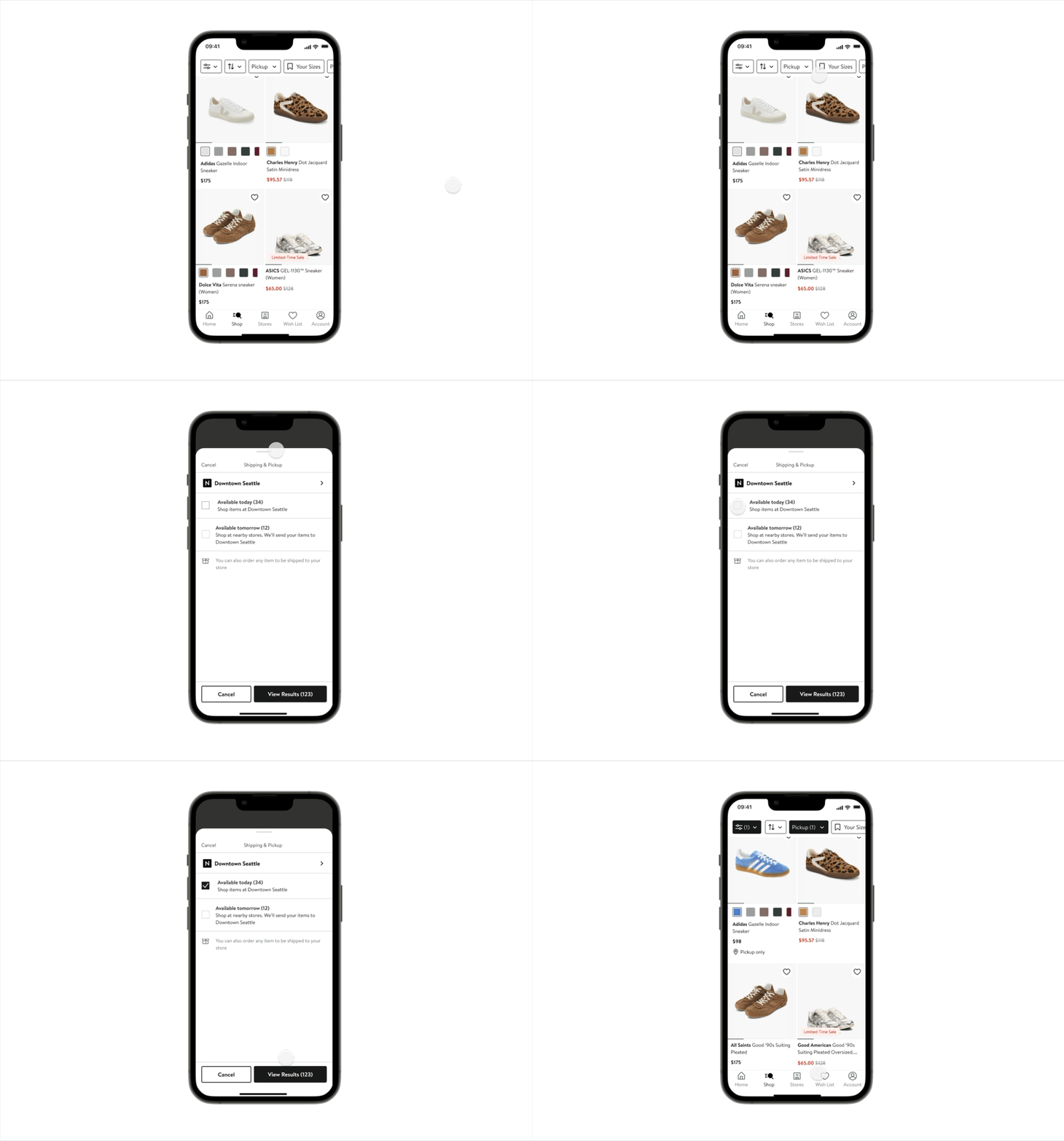
Surface pickup availability to support urgency-driven decisions

We learned from usability testing that customers often preferred pickup when they needed the items urgently and actively looked for products available the same day. While pickup filters existed, it was not clear enough for customers to confidently determine whether pickup met their needs. Without this information, customers had to navigate across multiple screens to validate fulfillment options.

Navigating constraints:
Using journey mapping, research, and competitive benchmarks, I identified discovery as the critical decision point for fulfillment. I introduced dynamic fulfillment messaging on product listing pages to surface pickup availability and readiness timing early, preventing customers from discovering constraints later in the journey.
3.

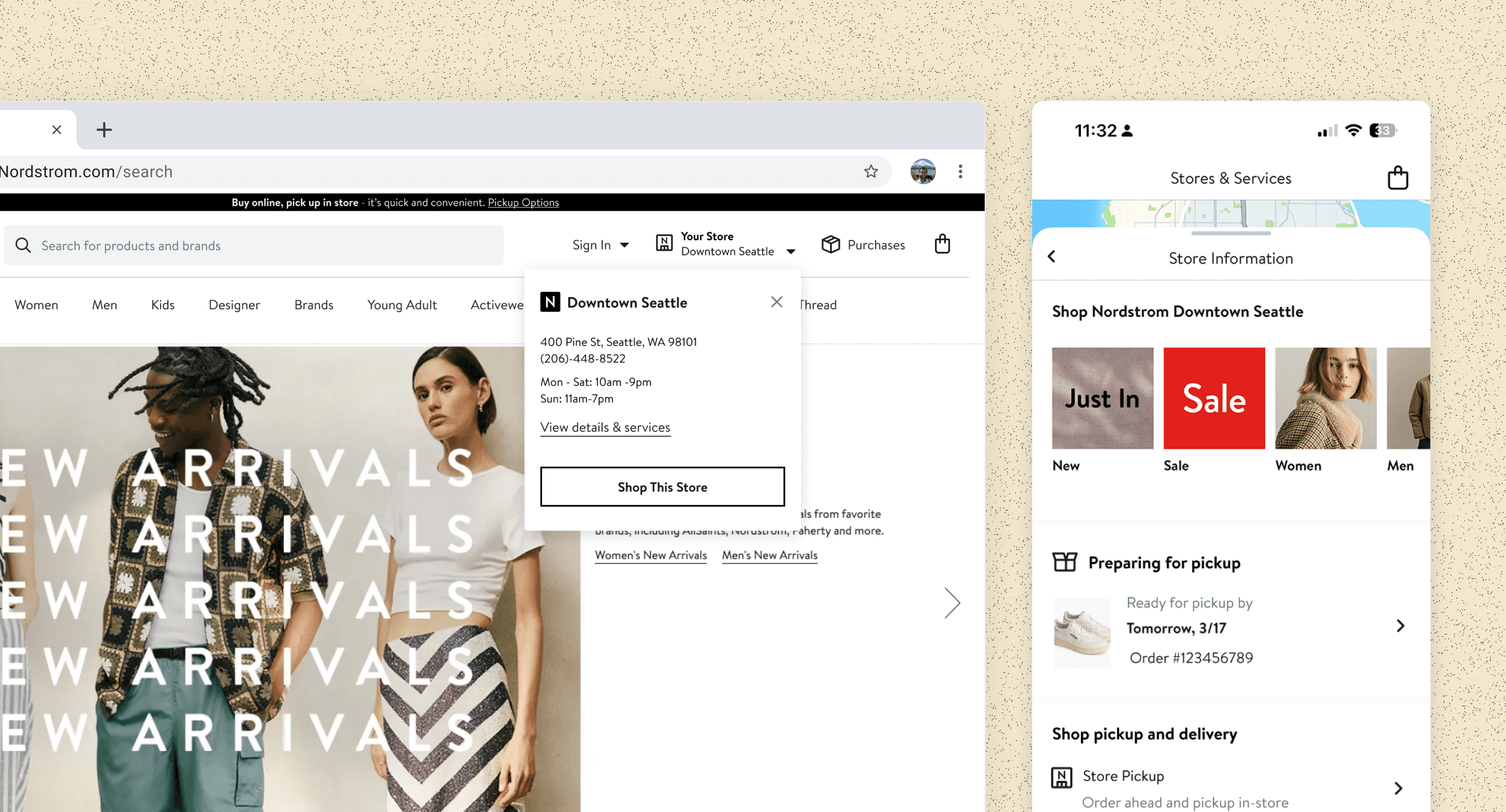
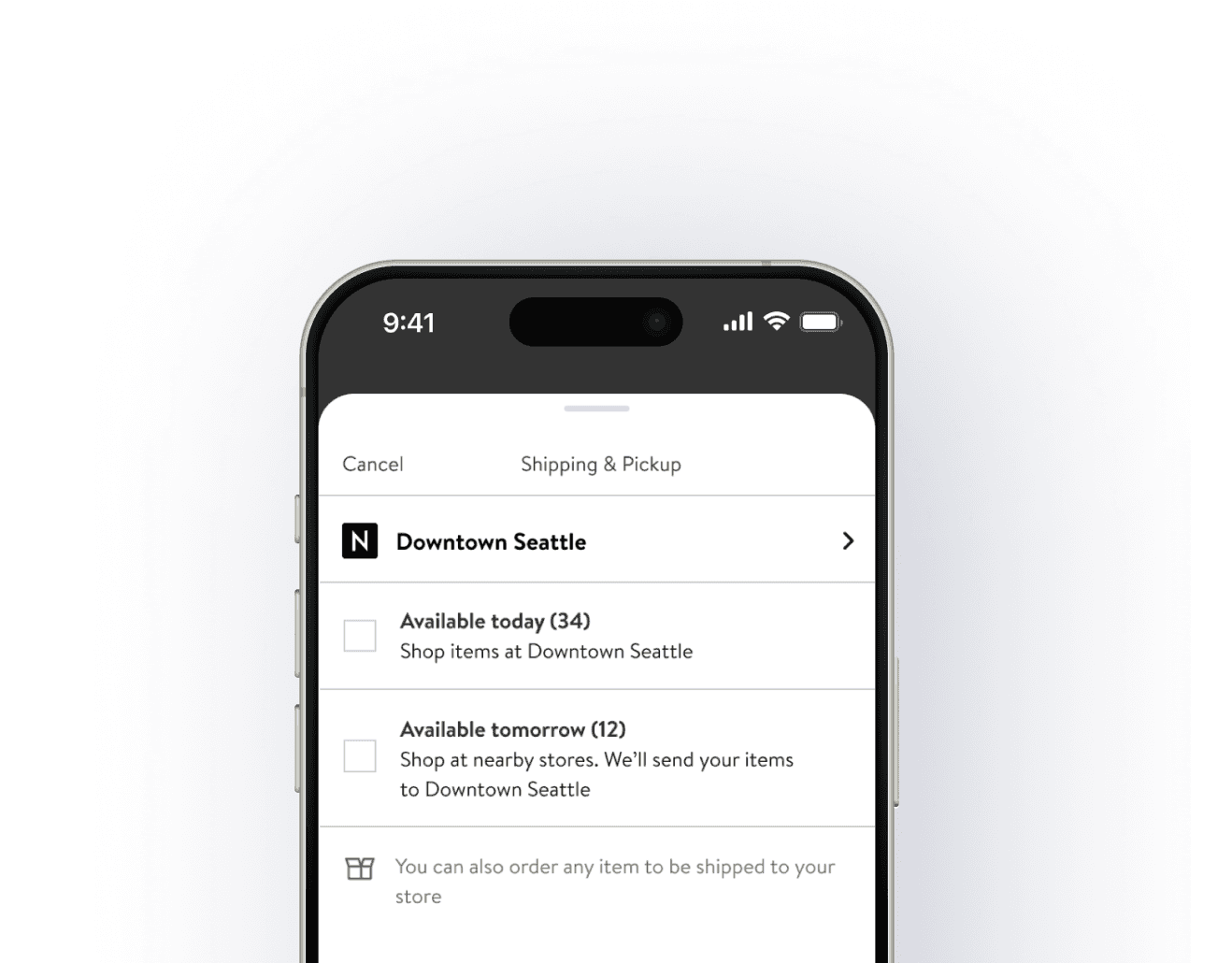
Making store access and switching easy within discovery

Customers expected immediate access to store information when landing on the site, but store entry points were difficult to find and inconsistent across platforms. This made it hard for customers to set or change their store and evaluate fulfillment options, limiting engagement with store inventory. Internal testing showed that improving store access significantly increased engagement and conversion


Navigating constraints:
I redesigned the filter and navigation flow to make store selection and switching easier, allowing customers to quickly see fulfillment options based on their selected store. Customers can access relevant inventory earlier, increasing engagement with store pickup.

The result

Results across web and app

+40%

Product detail click-through rate:

Increase in purchase click-through rate

+2.72%

Conversion rate for in-store items:

Increase in overall conversion rate

+29%

Store-enabled product engagement:

Increase in exploration of products available for store pickup

Driving engagement and conversion through store-enabled discovery

Introducing store navigation and fulfillment signals earlier in discovery significantly improved customers’ ability to engage with store inventory and make purchase decisions. By making store availability visible and actionable, customers were more likely to explore products, evaluate fulfillment options, and complete purchases supported by store inventory. This validated that surfacing store context earlier directly influenced downstream conversion and store-driven revenue

Prioritizing rollout based on feasibility and impact

Introducing omnichannel end-to-end was a significant technical effort. I worked closely with engineering to understand system dependencies and constraints, then helped prioritize features based on customer impact and implementation effort. This ensured we delivered the most valuable improvements first while building toward a cohesive long-term vision

Results launched across web and app

+40%

Increase in purchase click-through rate

Product detail click-through rate:

+2.72%

Conversion rate for in-store items:

Increase in overall conversion rate

+29%

Store-enabled product engagement:

Increase in exploration of products available for store pickup

Results launched across web and app

+40%

Product detail click-through rate:

Increase in customers clicking in product detail page

+2.72%

Conversion rate for in-store items:

Increase in overall conversion rate

+29%

Store-enabled product engagement

Increase in exploration of products available for store pickup

Reflections

Designing for complexity across platforms

Omnichannel experiences span web, app, and off-price systems, each with unique constraints. Covering scenarios early and aligning stakeholders on shared requirements prevented gaps and reduced back-and-forth later in execution.

Using shared artifacts to drive alignment

Creating centralized tools such as journey maps, workshops that resulted in centralized requirement documentation, and competitive benchmarks helped teams visualize the full experience, align on priorities, and make faster decisions with a shared understanding

Grounding decisions in research

With many moving pieces and opinions, research played a critical role in framing the right problems. Leaning on usability insights ensured decisions focused on real customer needs and helped teams move forward with confidence.

Designing for complexity across platforms

Omnichannel experiences span web, app, and off-price systems, each with unique constraints. Covering scenarios early and aligning stakeholders on shared requirements prevented gaps and reduced back-and-forth later in execution.

Using shared artifacts to drive alignment

Creating centralized tools such as journey maps, workshops that resulted in centralized requirement documentation, and competitive benchmarks helped teams visualize the full experience, align on priorities, and make faster decisions with a shared understanding

Using shared artifacts to drive alignment

Grounding decisions in research

Creating centralized tools such as journey maps, workshops that resulted in centralized requirement documentation, and competitive benchmarks helped teams visualize the full experience, align on priorities, and make faster decisions with a shared understanding

With many moving pieces and opinions, research played a critical role in framing the right problems. Leaning on usability insights ensured decisions focused on real customer needs and helped teams move forward with confidence.

Grounding decisions in research

With many moving pieces and opinions, research played a critical role in framing the right problems. Leaning on usability insights ensured decisions focused on real customer needs and helped teams move forward with confidence.