Purchase order management
Problem
Cost structure decisions were difficult to execute and validate due to manual workarounds and rigid system constraints. This increased downstream impact not only on employee efficiency, but also on cost accuracy and business performance.
Goal
This project focused on redesigning the cost management workflow, a critical feature that directly impacted cost accuracy, operational efficiency, and employee confidence.
My contribution
Owned redesign of the purchase order cost management workflow, focusing on improving how employees apply and manage cost changes within a complex enterprise system used by 3,500+ employees managing 300k-400k purchase orders annually.
Impact
Enabled employees to manage purchase order costs more efficiently by reducing reliance on manual workarounds and fragmented tools. The solution improved operational efficiency, increased cost accuracy, and established a scalable foundation for future financial workflow improvements.
Launched
2024
Who I worked with
Researcher
UX Writer
Engineers
PMs
Digital Operators
Buyers and assistants
Platform launched
Web Application
Purchase order management
Launched
2024
Who I worked with
Researcher
UX Writer
Engineers
PMs
Digital Operators
Supply Chain
Buyers and assistants
Platform launched
Web Application
Problem
Cost structure decisions were difficult to execute and validate due to manual workarounds and rigid system constraints. This increased downstream impact not only on employee efficiency, but also on cost accuracy and business performance.
Goal
This project focused on redesigning the cost management workflow, a critical feature that directly impacted cost accuracy, operational efficiency, and employee confidence.
My contribution
Owned redesign of the purchase order cost management workflow, focusing on improving how employees apply and manage cost changes within a complex enterprise system used by 3,500+ employees managing 300k-400k purchase orders annually.
Impact
Enabled employees to manage purchase order costs more efficiently by reducing reliance on manual workarounds and fragmented tools. The solution improved operational efficiency, increased cost accuracy, and established a scalable foundation for future financial workflow improvements.
Purchase order management
Problem
Cost structure decisions were difficult to execute and validate due to manual workarounds and rigid system constraints. This increased downstream impact not only on employee efficiency, but also on cost accuracy and business performance.
Goal
This project focused on redesigning the cost management workflow, a critical feature that directly impacted cost accuracy, operational efficiency, and employee confidence.
My contribution
Owned redesign of the purchase order cost management workflow, focusing on improving how employees apply and manage cost changes within a complex enterprise system used by 3,500+ employees managing 300k-400k purchase orders annually.
Impact
Enabled employees to manage purchase order costs more efficiently by reducing reliance on manual workarounds and fragmented tools. The solution improved operational efficiency, increased cost accuracy, and established a scalable foundation for future financial workflow improvements.
Launched
2023
Who I worked with
Researcher
UX Writer
Engineers
PMs
Digital Operators
Supply Chain
Buyers and assistants
Platform launched
Web Application
What led us to redesign?
Cost management was fragmented and difficult to execute
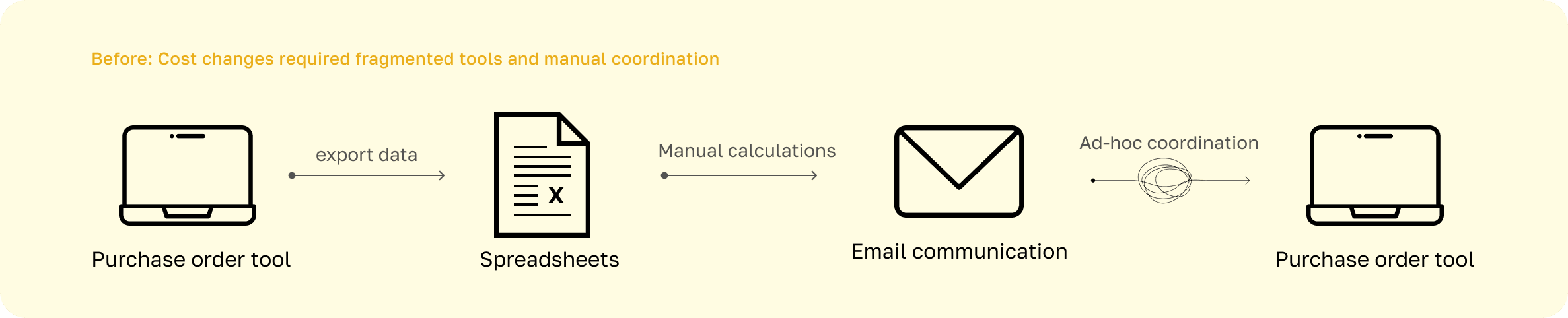
Employees struggled to apply and validate cost adjustments due to rigid workflows and limited system flexibility. To complete routine tasks, they often had to manually calculate discounts, track cost changes outside the system, and rely on institutional knowledge to navigate complex scenarios.
These fragmented and manual processes increased cognitive load, introduced risk of error, and slowed decision-making, making it difficult for employees to confidently manage purchase order costs.
Cost management was fragmented and lacked transparency
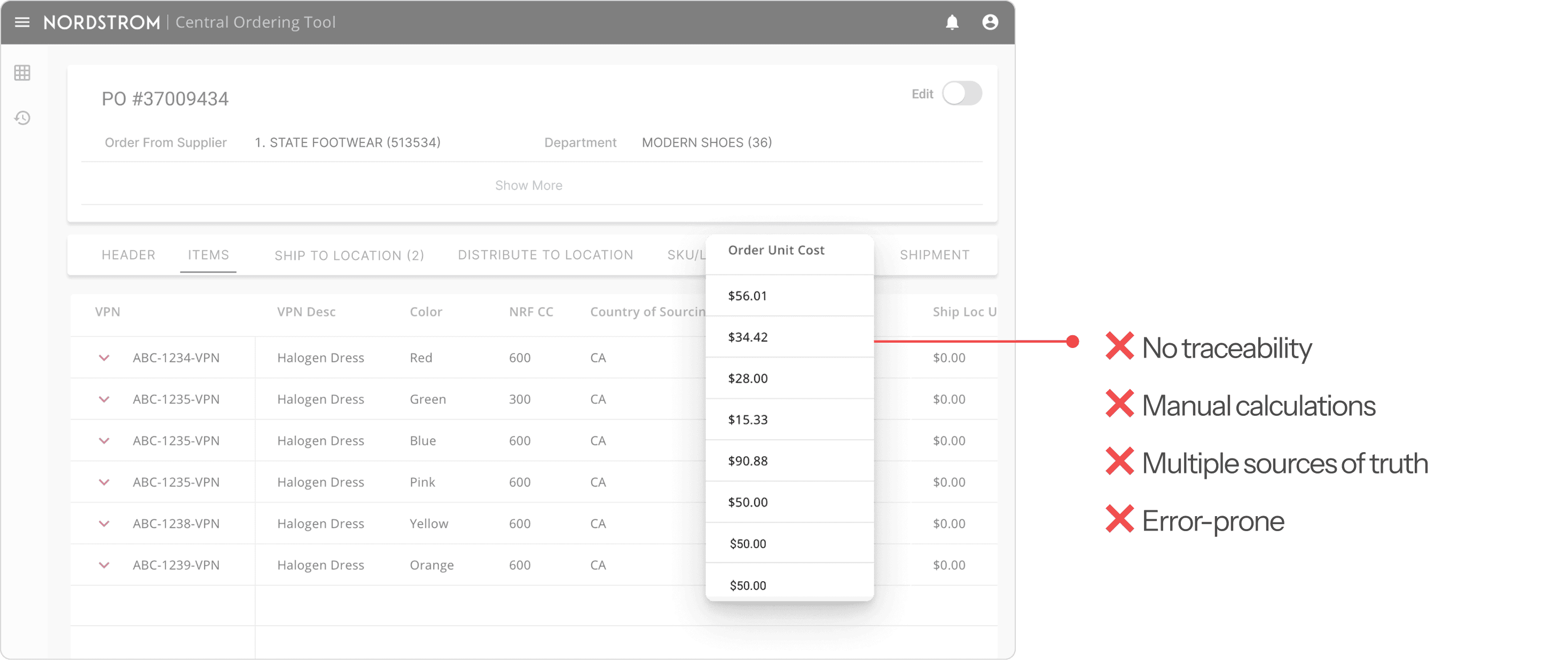
Employees relied on external tools like spreadsheets to track and apply cost changes because the system couldn’t support pricing scenarios whether adjusting an entire order, specific SKUs, or individual item variations. There was no clear record of who made changes or why, making it difficult to understand cost history and confidently negotiate with vendors. This created inefficiencies, increased risk of errors, and reduced trust in the system.
Before
Cost management was fragmented and lacked transparency
Employees relied on external tools like spreadsheets to track and apply cost changes because the system couldn’t support pricing scenarios whether adjusting an entire order, specific SKUs, or individual item variations. There was no clear record of who made changes or why, making it difficult to understand cost history and confidently negotiate with vendors. This created inefficiencies, increased risk of errors, and reduced trust in the system.
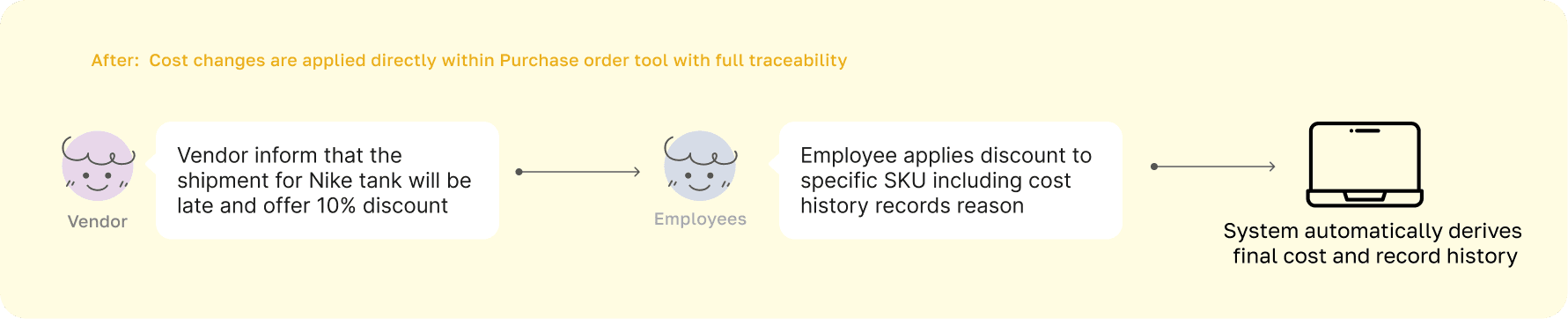
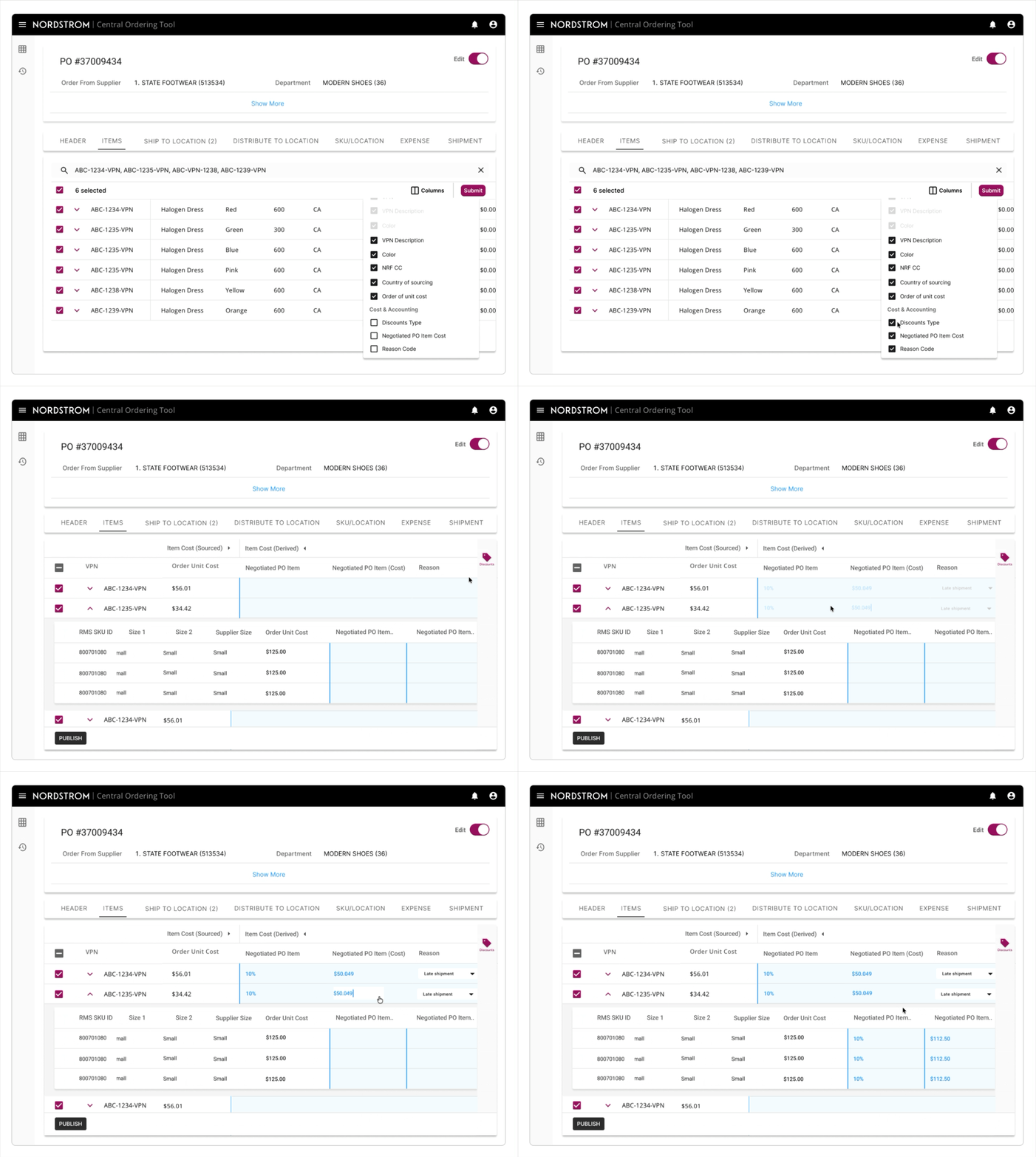
Enable flexible, traceable cost management within the system
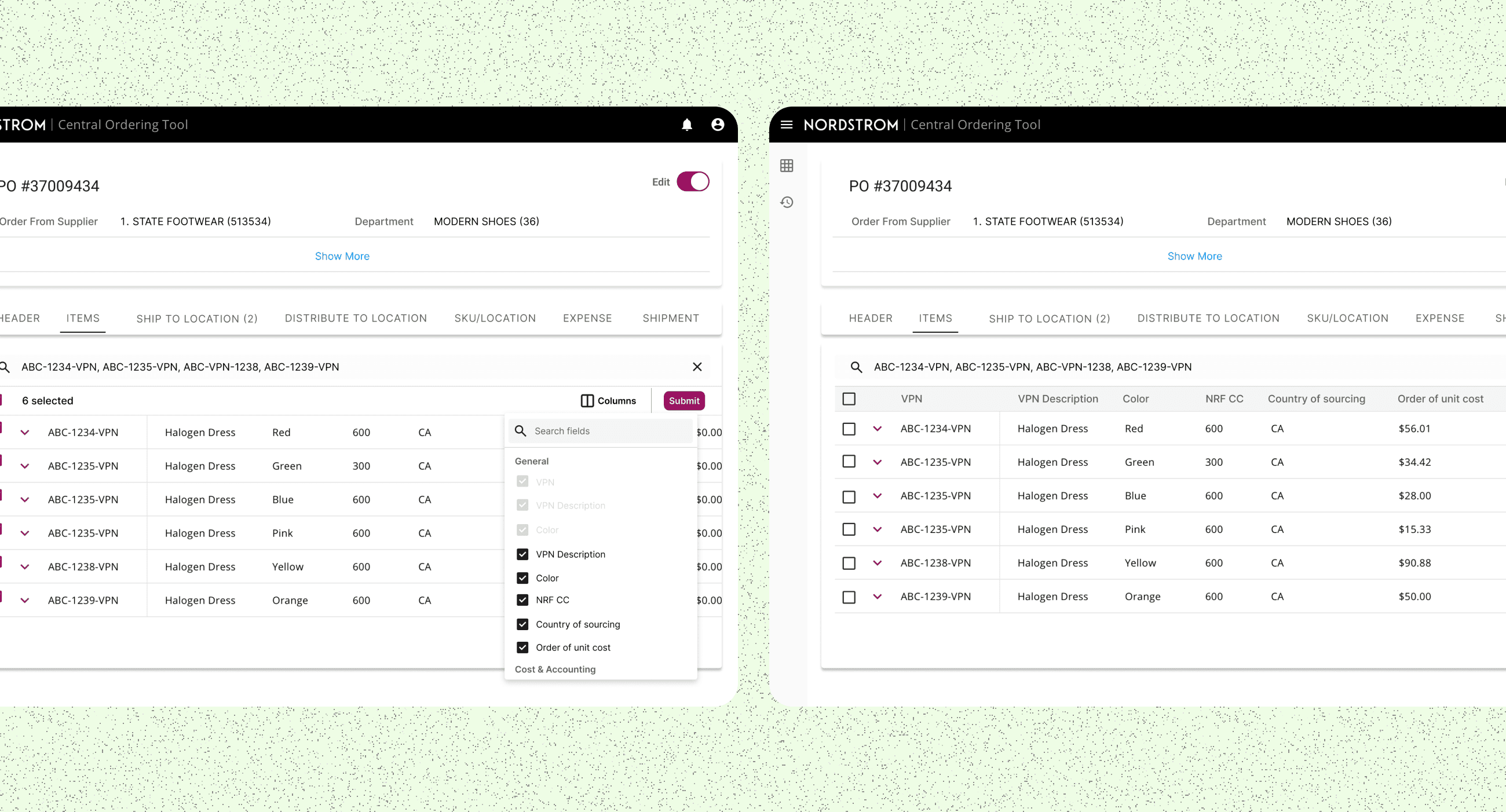
I redesigned the workflow to support cost changes directly within the purchase order tool, allowing employees to apply adjustments at any level with clear documentation and visibility into cost history. By making changes transparent and traceable, employees could manage costs more efficiently, understand pricing decisions over time, and confidently support vendor negotiations.
After
Enable flexible, traceable cost management within the system
I redesigned the workflow to support cost changes directly within the purchase order tool, allowing employees to apply adjustments at any level with clear documentation and visibility into cost history. By making changes transparent and traceable, employees could manage costs more efficiently, understand pricing decisions over time, and confidently support vendor negotiations.
After
Automated
Centralized
Reliable
Traceable
Automated
Centralized
Reliable
Traceable
Before
Cost management was fragmented and lacked transparency
Employees relied on external tools like spreadsheets to track and apply cost changes because the system couldn’t support pricing scenarios whether adjusting an entire order, specific SKUs, or individual item variations. There was no clear record of who made changes or why, making it difficult to understand cost history and confidently negotiate with vendors. This created inefficiencies, increased risk of errors, and reduced trust in the system.
After
Enable flexible, traceable cost management within the system
I redesigned the workflow to support cost changes directly within the purchase order tool, allowing employees to apply adjustments at any level with clear documentation and visibility into cost history. By making changes transparent and traceable, employees could manage costs more efficiently, understand pricing decisions over time, and confidently support vendor negotiations.
Automated
Centralized
Reliable
Traceable
Why does this matter the entire supply chain process?

Improving cost accuracy through scalable purchase order workflows
Cost decisions directly impact business profitability, and when employees lacked confidence in the system, it led to inefficiencies, cost inaccuracies, and delays in purchasing decisions.
Because purchase orders drive downstream processes across planning, vendor management, fulfillment, and inventory, these issues created ripple effects throughout the supply chain. Improving this experience was critical to ensure accurate cost data, enable faster decisions, and support smoother end-to-end operations.
Improving cost accuracy through scalable purchase order workflows
Cost decisions directly impact business profitability, and when employees lacked confidence in the system, it led to inefficiencies, cost inaccuracies, and delays in purchasing decisions.
Because purchase orders drive downstream processes across planning, vendor management, fulfillment, and inventory, these issues created ripple effects throughout the supply chain. Improving this experience was critical to ensure accurate cost data, enable faster decisions, and support smoother end-to-end operations.
The decisions that shaped the redesigned
Defining shared goals to drive measurable impact
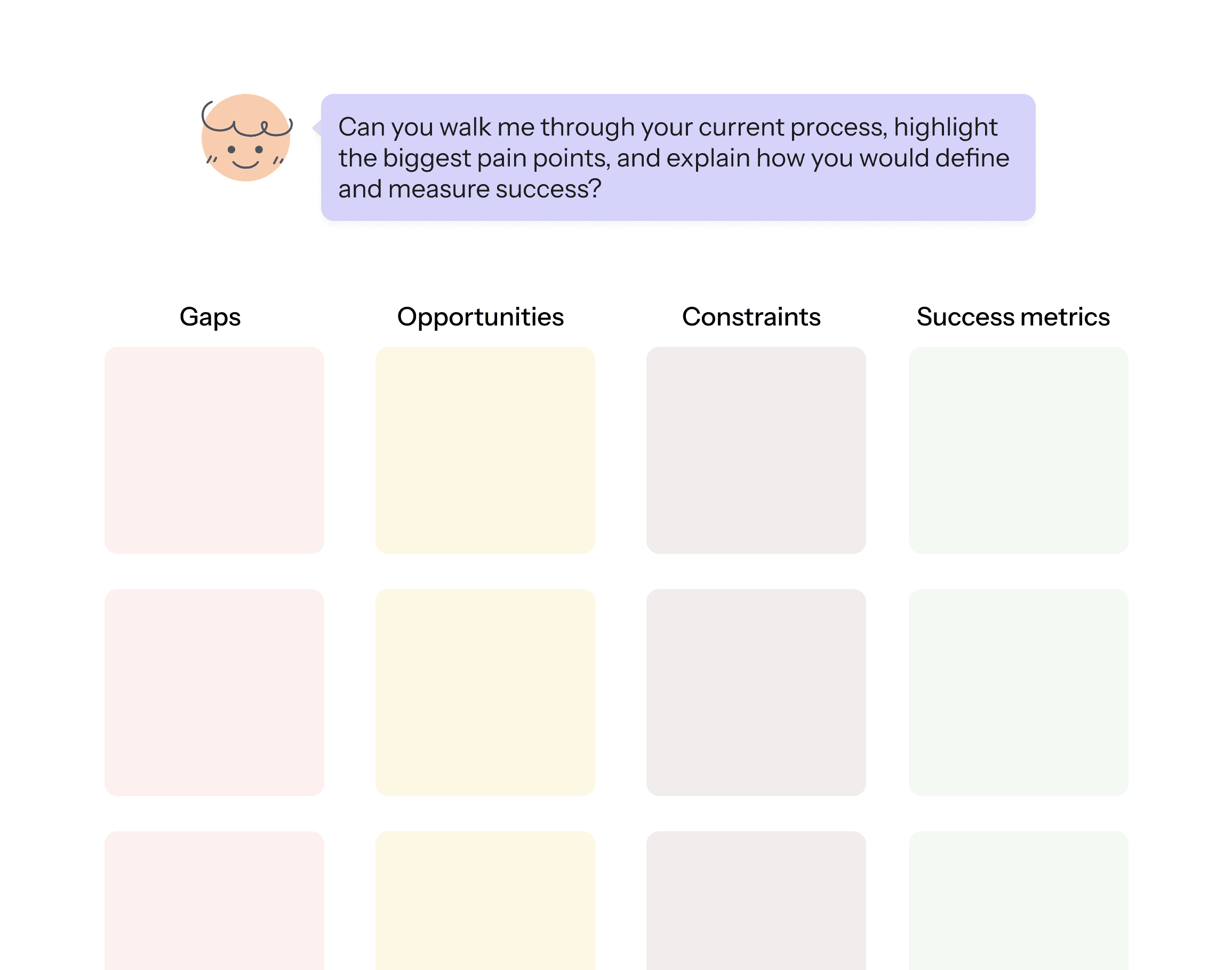
Given the scale and complexity of the purchase order system, I partnered with cross-functional stakeholders to define clear goals for the redesign. We aimed to help employees manage cost changes more efficiently, reduce manual workarounds, and improve visibility into cost decisions.
These goals ensured the redesign reduced operational friction, enabled more confident purchasing decisions, and strengthened data reliability across the supply chain.
Success metrics will be measured by:
Reduce manual cost tracking system steps from spreadsheets to external tools to 1 system
Enable employees to complete cost updates without leaving workflow
Standardize cost documentation across teams
1.
Aligning stakeholders around shared goals and success metrics:
The project began with misaligned priorities and limited visibility into how each department managed purchase orders. Workflows varied across teams and departments making it difficult to identify shared pain points and define a clear direction.
Navigating constraint:
I facilitated working sessions with cross-functional partners to map workflows and identify common patterns across teams. This helped us align on the most critical problems while ensuring the solution remained flexible enough to support different workflows.
This created a clear foundation that shaped our roadmap and grounded in measurable business impact.
2.
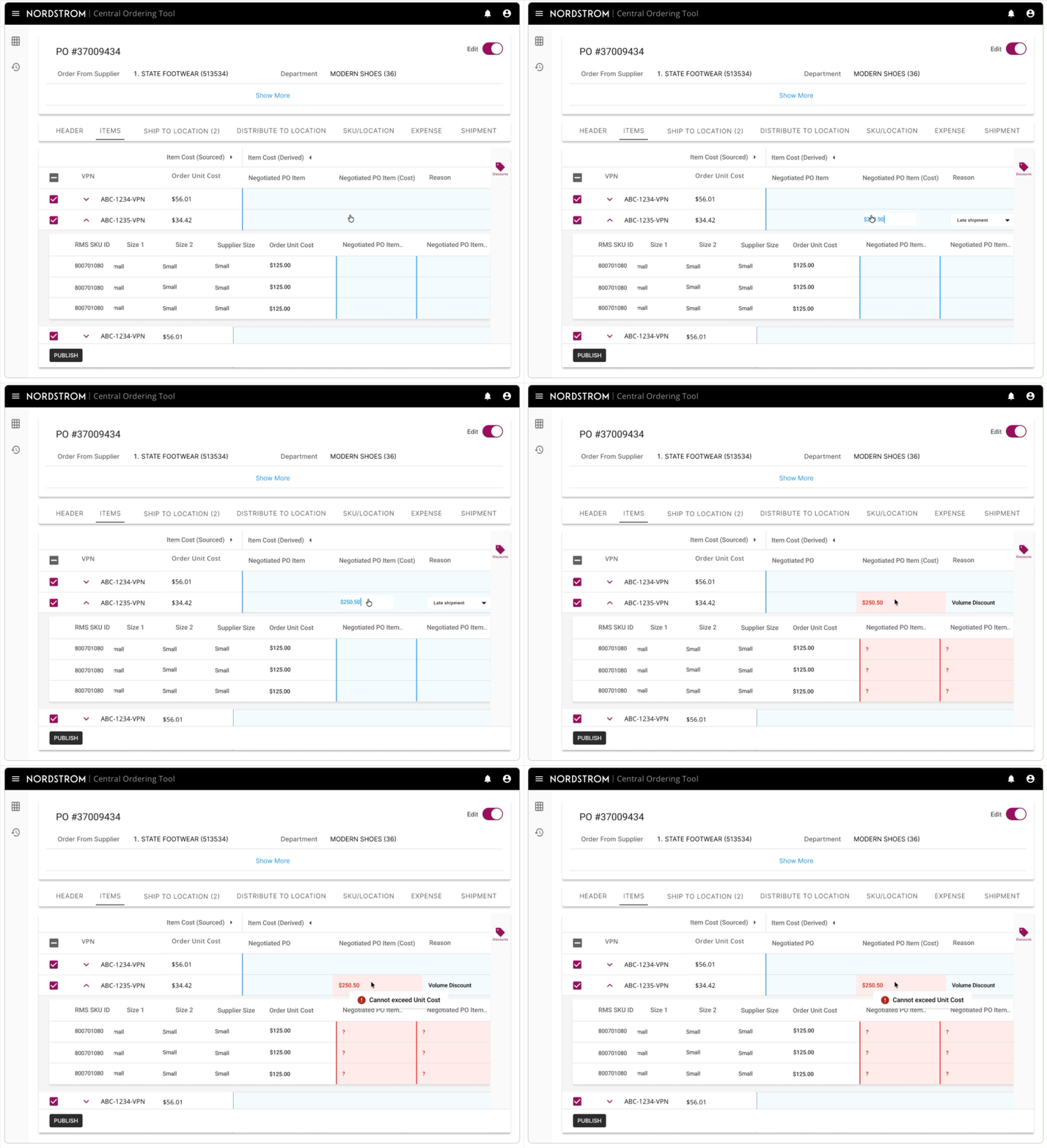
Consolidating fragmented workflows into a single source of truth:
Employees relied on spreadsheets and manual entries to apply and validate cost changes, leading to inconsistencies, errors, and time-consuming working process. The lack of visibility and traceability reduced confidence in the system and slowed purchasing decisions.
Navigating constraints:
To support complex real-world scenarios, I designed flexible cost inputs with built-in traceability, automated calculations to derive accurate totals, and real-time validation to surface errors instantly. This ensured the system could replace external tools while remaining technically feasible.
This streamlined workflows, eliminated manual workarounds, and established a reliable, transparent source of truth for cost management.
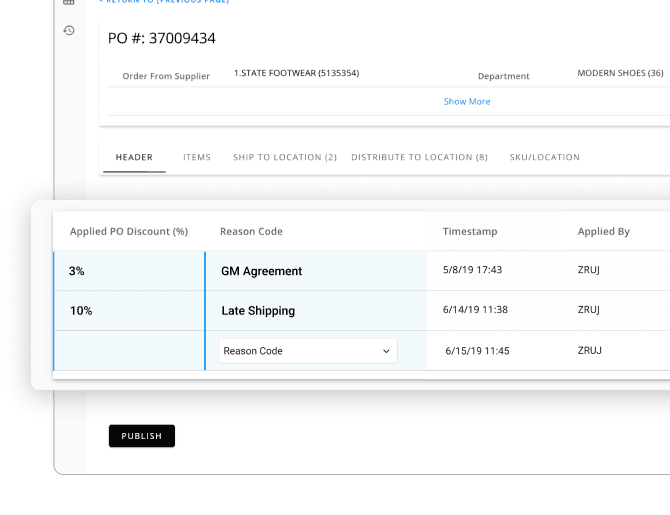
3.
Designing flexible and traceable discount management:
The existing system lacked flexibility for applying discounts at different levels, making it difficult for employees to accurately manage cost changes. This led to inconsistent data, limited traceability, and reduced confidence in cost decisions.
Navigating constraints:
Through usability testing and workflow analysis, I identified the need to support both high-level cost adjustments and detailed, item-level changes. I designed a centralized discount management experience within the purchase order summary that allowed employees to apply, view, and track cost changes in context while maintaining full traceability.
This improved transparency, standardized cost management, and enabled employees to confidently manage purchasing decisions.
2.
Consolidating fragmented workflows into a single source of truth:
Employees relied on spreadsheets and manual entries to apply and validate cost changes, leading to inconsistencies, errors, and time-consuming working process. The lack of visibility and traceability reduced confidence in the system and slowed purchasing decisions.
Navigating constraints:
To support complex real-world scenarios, I designed flexible cost inputs with built-in traceability, automated calculations to derive accurate totals, and real-time validation to surface errors instantly. This ensured the system could replace external tools while remaining technically feasible.
This streamlined workflows, eliminated manual workarounds, and established a reliable, transparent source of truth for cost management.
3.
Designing flexible and traceable discount management:
The existing system lacked flexibility for applying discounts at different levels, making it difficult for employees to accurately manage cost changes. This led to inconsistent data, limited traceability, and reduced confidence in cost decisions.
Navigating constraints:
Through usability testing and workflow analysis, I identified the need to support both high-level cost adjustments and detailed, item-level changes. I designed a centralized discount management experience within the purchase order summary that allowed employees to apply, view, and track cost changes in context while maintaining full traceability.
This improved transparency, standardized cost management, and enabled employees to confidently manage purchasing decisions.
The results
Improving efficiency and confidence in purchase order management
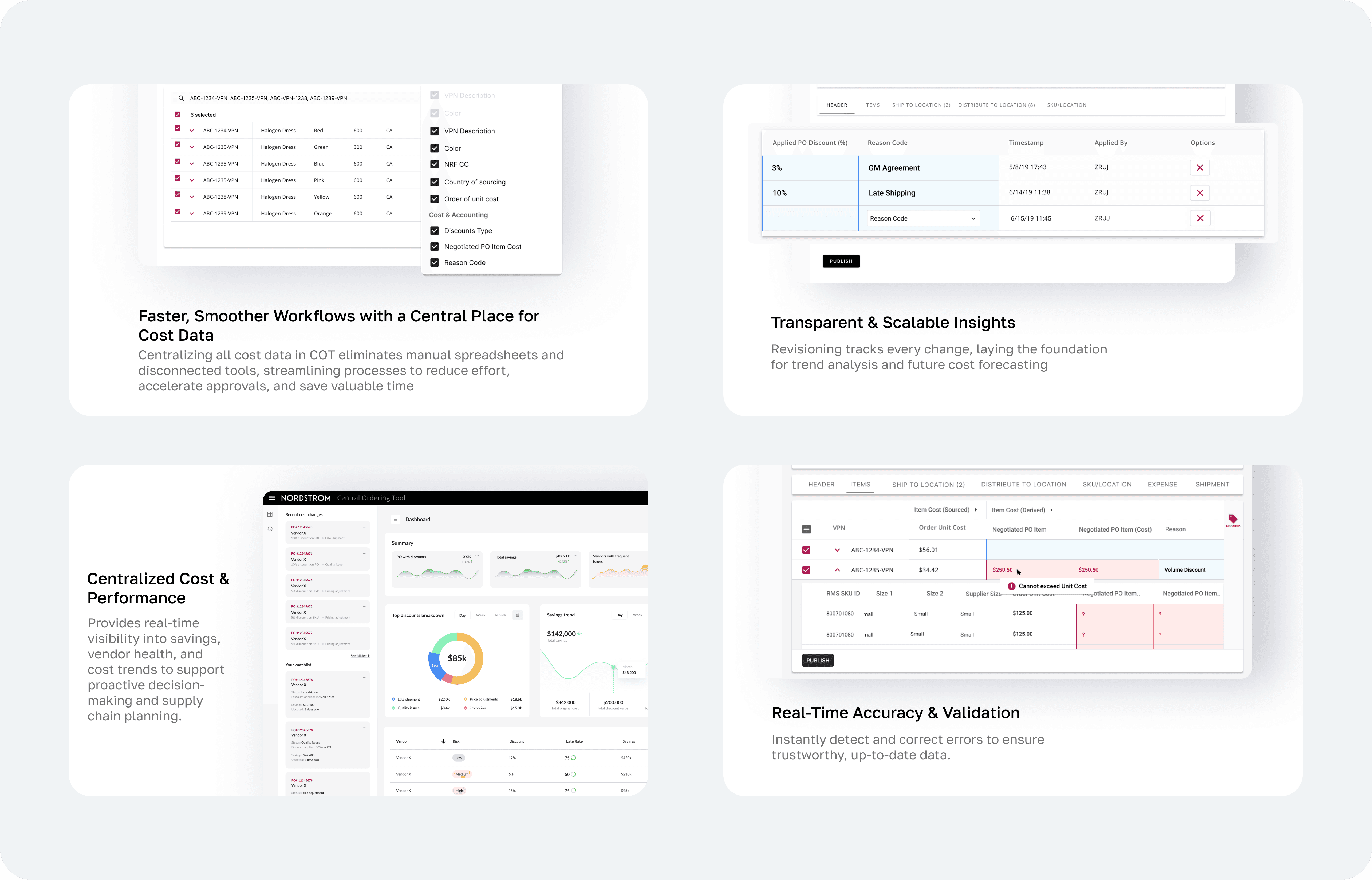
Centralizing cost workflows eliminated external tools and manual tracking, enabling employees to manage purchase orders more efficiently and with greater confidence. Improved traceability and automated calculations reduced errors and increased trust in cost data, supporting faster purchasing decisions and more reliable downstream supply chain operations at scale.
Results for 3,500 employees manage 300-400k purchase order annually
Results for 3,500 employees managed 300-400k purchase order annually
Centralized Workflows
Unified cost management into a single system, eliminating fragmented processes and improving operational consistency.
Efficiency & Productivity
Reduced manual effort by automating cost calculations and enabling faster, more efficient purchase order management.
Data Accuracy & Trust
Provided transparent cost history and validation, improving data reliability and decision confidence.
Reduced reliance on
external tools
Replaced spreadsheet-based workflows with a centralized, traceable solution for managing cost changes.
Improving efficiency and confidence in purchase order management
Centralizing cost workflows eliminated external tools and manual tracking, enabling employees to manage purchase orders more efficiently and with greater confidence. Improved traceability and automated calculations reduced errors and increased trust in cost data, supporting faster purchasing decisions and more reliable downstream supply chain operations at scale.
Results for 3,500 employees managed 300-400k purchase order annually
Centralized Workflows
Unified cost management into a single system, eliminating fragmented processes and improving operational consistency.
Efficiency & Productivity
Reduced manual effort by automating cost calculations and enabling faster, more efficient purchase order management.
Data Accuracy & Trust
Provided transparent cost history and validation, improving data reliability and decision confidence.
Reduced reliance on
external tools
Replaced spreadsheet-based workflows with a centralized, traceable solution for managing cost changes.
Learnings and next steps
Scaling cost management beyond individual purchase orders
While the redesign improved how employees apply and track cost changes, cost decisions don’t happen in isolation. If I were to continue this work, I would explore ways to help teams monitor cost patterns across vendors and purchase orders to support better negotiation and planning decisions
Expanding visibility across the supply chain
Cost changes impact multiple downstream partners, including finance, planning, and inventory teams. Creating shared audit views and reporting tools would improve transparency and help teams stay aligned using the same source of truth.
Measuring long-term impact and adoption
Defining and tracking success metrics such as reduced manual work, faster task completion, and system adoption would help evaluate the effectiveness of the redesign and identify opportunities for continued improvement.
Designing more flexible and scalable frameworks
This project focused on improving cost workflows, but similar challenges exist across other information management scenarios. Establishing reusable design patterns would allow the system to support evolving business needs while maintaining consistency and reducing operational complexity.
Scaling cost management beyond individual purchase orders
While the redesign improved how employees apply and track cost changes, cost decisions don’t happen in isolation. If I were to continue this work, I would explore ways to help teams monitor cost patterns across vendors and purchase orders to support better negotiation and planning decisions
Expanding visibility across the supply chain
Cost changes impact multiple downstream partners, including finance, planning, and inventory teams. Creating shared audit views and reporting tools would improve transparency and help teams stay aligned using the same source of truth.
Measuring long-term impact and adoption
Defining and tracking success metrics such as reduced manual work, faster task completion, and system adoption would help evaluate the effectiveness of the redesign and identify opportunities for continued improvement.
Designing more flexible and scalable frameworks
This project focused on improving cost workflows, but similar challenges exist across other information management scenarios. Establishing reusable design patterns would allow the system to support evolving business needs while maintaining consistency and reducing operational complexity.